The Imagined New Volume II:
Black Sonic
Hosted by VIAD in partnership with the Ruth J. Simmons Centre for the Study of Slavery and Justice
ONLINE
December 2022
Volume II paid particular attention to sonic creations as an alternate realm for Black life to enact freedom. In this second volume of the Imagined New notions of heritage and heresy were turned toward one other, rather than in opposition. Black Radical Traditions were understood as theories of practice attuned to the work of collective listening and Black Sonic was developed as an exploratory programme. The digital archive Black Sonic was launched in December 2022 as a haptic, loosely structured and interdisciplinary sonic experiment.

“To be clear, the Black Sonic then is not about sound or sonics as content or category, as the cultural ‘by-product’ of the black experience, but sound and sonics as a heritage of heretical praxis; as so many ways of being and becoming. By Black Sonic we thus mean (or rather, call into play) the multiple soundings, dissonances, resonances, rhythmic patterns and diasporic relays that have historically animated and continue to enunciate Black life and create new types of archives. Archives that both store and broadcast the Black Sonic.”
Anthony Bogues | Interview
Curatorial Statement
If the project of history is one of silence, of the systematic erasure and disappearance of those considered peripheral to the optic fantasy and logo-centrism of ‘civilization’ (read whiteness), then how might the sonic present a uniquely enabling modality for thinking, feeling and performing a different historical imagination? If the fantasy of ‘civilization’ is sustained by imagining and reimagining relationships with the environment, memory and a set of inherent rules which imbricate Whiteness with the sacred, then how does the profane (read Blackness) undertake this task of historical (re)imagination? How do those that face down the catastrophe of history rebuild in its aftermath(s)?
Central to this rebuilding is a certain conception of Heritage and Heresy. Here, heritage is not, intended as a kind of singular cultural, national or continental identity but as praxis or rather, a set of praxes that operate both in relation to and against the logo-centrism of ‘civilization.’ As an expression, Blackness challenges the stability of the sacred-profane dialectic. In so doing, heresy reveals the paradox of the orthodox and enacts the possibility of choice. Through this heritage of praxis, the ordinary crossfades into the extraordinary and the dissolution of the boundary is itself heretical. The words that comprise The Souls of Black Folk: Essays and Sketches by W.E.B. Du Bois are meaningless without the title’s referent black folk. If logo-centrism posits the word as sacred, these articulations of Blackness (which look beyond the word) become heresy, enacted.
Through these broadcasts, the quietude of slavery and colonialism are disturbed across historical time. Similarly, these broadcasts traverse geographical space and amplify the trans-nationality of Black Lives Matter. Taken together, the Black Sonic underscores the dynamic range of Fred Moten’s “black phonic substance” and the ways in which black, brown, femme and queer people from across the African diaspora embody and make shareable its many cadences.
As volume II of The Imagined New (or, what happens when History is a Catastrophe?), Black Sonic presents a digital programme to explore the Black Sonic and its heritage of heretical praxis. These praxes are the conditions for new historical imagination(s) across time and space.
Movements Toward the Black Sonic: Playlists from the Curators
Lois Anguria
Lois Anguria is an early career academic with a focus on the manufacture of visibility for Black women artists.
Machel Bogues
Machel is an experienced curator whose work aims towards increasing visibility for Black creatives and narratives.
Will Johnson
Will is a researcher and audio artist whose works focuses on blackness, memory and digital domains of spacetime.
Melaine Ferdinand-King
Melaine is a researcher and curator, focused on aesthetics/ethics, Black culture, and Afro-Surrealism.
Kundai Moyo
Kundai is a visual artist and curator whose personal practice focuses on affect theory, love, cruel optimism and stranger studies.


“Who knows but that, on the lower frequencies, I speak for you?”
Ralph Ellison | The Invisible Man
Welcome to Black Sonic
Black Sonic features a prelude of the concept as part of four curated ‘sets’ in the form of audio and audiovisual mixtapes:
Set 1: Prelude: Heritage as Heresy
Set 2: Black Phonic Substance
Set 3: Radical Imagination of the Ordinary
Set 4: Erased Bodies & Perceptive Knowledge(s).

The Black Sonic sets assemble a range of offerings including playlists, conversations, podcasts, listening sessions, and interviews. Following the thematic of heritage as heresy, the hope is for those who engage with the digital archive to continue the explorations begun in 2020-2022, to uncover, unpack, create and circulate emerging definitions of Black Sonic(s) that bring further polyvocality to the making of new archives. In future, African sounds may remix the popular notions of Black thought currently in use. Migrations and nomadic indigenous knowledges may shift the sonic and speculative possibilities of technological advancement. Diasporic dialogue may deepen understanding of Black living histories outside catastrophic frameworks.
Set 1: Prelude – Heritage as Heresy
A discussion of Radical Black imagination and the heretic practices therein.
On 12th October 2021, Prof Anthony Bogues sat to discuss how heretical positions can themselves become heritage.

The concept of Black Sonic as language is unpacked by Prof Anthony Bogues, Asa Messer Professor of Humanities and Critical Theory, Professor of Africana Studies, Director of the Center for the Study of Slavery and Justice, through a YouTube video
“For the language of the Black sonic, I began with thinking around questions of what the sonic is. Is it language? Is it a grammar?”
Anthony Bogues | Interview
Set 2: Black Phonic substance
An exploration of the material aspects of black phonic substance with reference to Fred Moten.
Black Phonic Substance is a visual-sonic mixtape. Within this mixtape, language is discussed as a central concern of black life. This experiment positions black life as the heretical premise that challenges the orthodoxy of language as defined by the perceptual limits of post-structuralism and linguistics. Here, we consider the phonic substance of teeth sucking, eye rolling and the dialectics of throwing shade.
Black Phonic Substance is the attempt to unsettle the “analytic-interpretative reduction of phonic materiality” and discuss blackness as an ongoing improvisation “that moves in excess of meaning.”
Is it possible to discuss blackness as a sign, signifier and a neither that is both? How might blackness name a fluidity and continuum of expressive communication that exceeds the rigid borders of discipline or geographic location? On these imprecise terms, the published academic texts of both Fred Moten and Denise Ferreira Da Silva become a score – a set of symbolic pitches, rhythms and phrases embodied by performers Carl Hancock Rux and Okwui Okpokwasili, organized into an imagined mix. Vernon Reid scores the opening remarks on Wah-Wah guitar.

Black Wah, A Culture Loop
To provoke this discussion, digitally archived film and sound are edited, coded and rendered into forms that challenge the formalistic substance of form and substance. As a mixtape, Black Phonic Substance has no singular author or epistemological orthodox. Rather, the focus of the mixtape is Fred Moten’s “anarchic organization” of sound, speech, voice, body and moving image. What is the sonic form that reveals the limits of categorical speech as an organizing mechanism for knowledge and its production? Fred Moten describes “phonic materiality” as the substance that is lost through the “analytic-interpretive” gaze. How might black sound, speech and voice challenge this analytic-interpretive gaze? Within the mix, phonic substance sounds out what Denise Ferreira Da Silva calls “the disruptive/creative capacity that blackness hosts/holds.”
Fred Moten & Denise Ferreira DSilva. An Imagined Conversation
“The historical situation of Blackness has led people in practice to do certain things… [this] is a historical argument about what Blackness produces because of the way in which people are located in society and how Black folks flip the script, and… create… different terrain… develop a different mode of being human that other people can join.”
Anthony Bogues | Interview
Set 3: Radical Imagination of the Ordinary
A dive into the ways sound, dress, and movement can be used to create and reclaim spaces for new possibilities. This set takes its title from Njabulo S. Ndebele’s important book Rediscovery of the
If the project of history is marked by catastrophe, of systematic thingification, the rendering of everything considered peripheral to the optic fantasy of civilisation (read whiteness) as objects to be manipulated in service of that fantasy. How then might the Black Sonic help fire a radical imagination that “flips that script” and begin a process of “smaddyisation”; becoming not a thing but a “smaddy” (Jamaican word for somebody). In this section we consider how people use sound, dress, and movement to both create and claim spaces to declare and display these newly imagined and reimagined somebodies.
Through the contribution of Rhea Storr, we explore Carnival and Junkanoo practice(s) as a way to create these spaces. Through the contribution of DJ Lynnee Denise we explore the relationship between movement and sound as a kind of technology for accessing new types of being. With Zara Julius’ contribution we listen to and experience sound as something tangible and visceral and Ashon Crawley contributes by taking us through his art practice(s) as a way to reconcile the past with the present.
CARNIVAL AND THE IMAGINATION OF THE BLACK RADICAL
Contributor: Rhea Storr
Artist filmmaker and researcher investigating Black Radical Imagination as realised through experimental cinema.
In this visual essay produced specially for the project, Heresy as Heritage Rhea Storr, reflects on the Black Sonic, and the interview with Prof Bogues, her previous works Junkanoo Talks and A Protest, A Celebration a Mixed Message, her practices as a filmmaker and her relationship with carnival and junkanoo.
Taken together we begin to see Carnival and Junkanoo as sites of knowledge, as archives of skills and knowledge techniques, as heritage from which heresy is inherited. Storr positions junkanoo not only as a space to assert national and personal pride but also as a conjunction point where the past is remembered, the present celebrated and possible futures imagined. Through junkanoo practices of costume making, dance and singing, ideas and knowledge about the world are shared with participants and told to the viewer through pageantry. This pageantry forms a new kind of commentary that articulates and asserts new, understandings of what it means to be human.
ELECTRIC RING SHOUT
Contributor: DJ Lynnée Denise
Artist, scholar, writer, and DJ whose work reflects on underground cultural movements, the 1980s, migration studies, theories of escape, and electronic music of the African Diaspora.
Using archive footage DJ Lynnee Denise explores the symbiotic relationship between sound and movement. A relationship that provides a platform for people to transcend into new states of being and from within the safety of the Electric Ring Shout to assert and express these new identities.
DJ Lynnee Denise graciously sat down with us for a discursive conversation based on Electric Ring Shout. Here we discussed not only the relationship between sound and movement but also rhythm as heartbeat and how different modes of dance seek out different relationships with that beat and in so doing continuously find new ways to express being smaddy.

Electric Ring Shout

Lynnee Denise in conversation with the Black Sonics Team
IN CONVERSATION WITH ZARA JULIUS
Contributor: Zara Julius
Zara Julius is an interdisciplinary artist, researcher and cultural worker based in Johannesburg, South Africa. She is especially engaged in thinking through the internal workings of the Black sonic, and how they might help us reconstitute time (pasts, presents, futures) in the face of various unfreedoms.
Zara Julius takes us through a working methodology of ‘rapture’. Thinking through the internal workings of the Black sonic, and how they might help us reconstitute time (pasts, presents, futures) in the face of various unfreedoms, they shared a Black Sonic Playlist. This sometimes personal but always fascinating journey around Africa and the Diaspora used sound to both transport and locate us in specific geographies but also lift us to rapturous new heights and spaces.
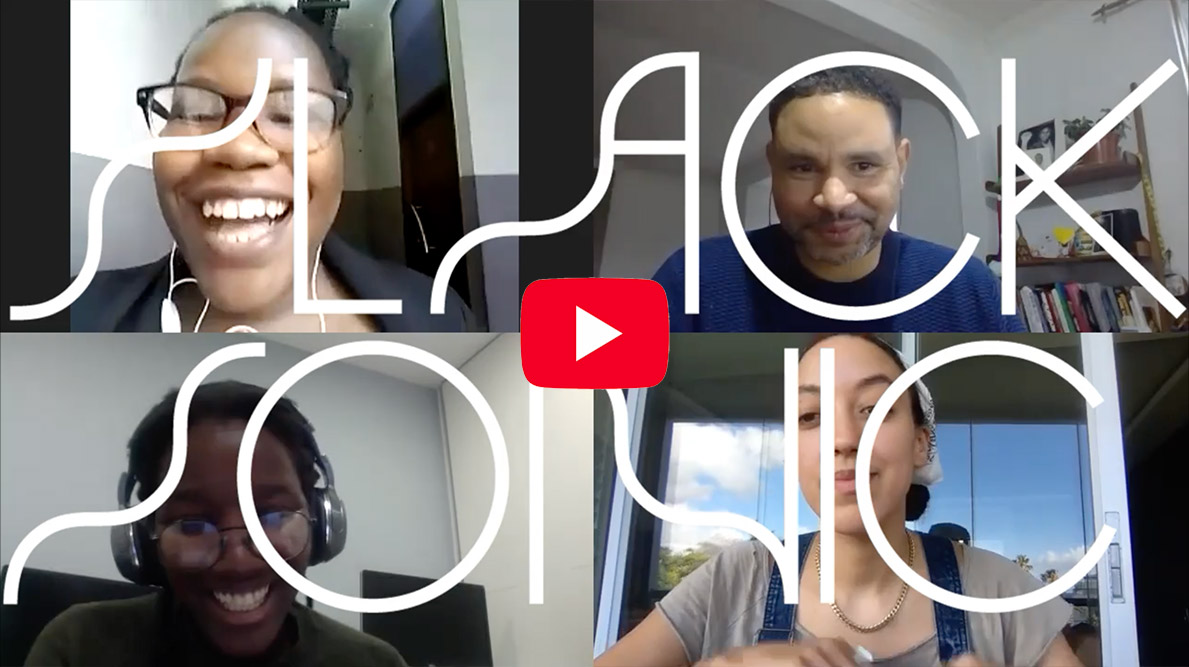
Watch Zara Julius discuss her black Sonic Playlist with the team
SENSING BLACK FREQUENCY: RESONANCE
Contributor: ashon crawley
ashon crawley is an audioartist and Professor of Religious Studies and African-American and African Studies at the University of Virginia. He is the author of Blackpentecostal Breath: The Aesthetics of Possibility (2016) and The Lonely Letters (2020).
In this presentation ashon crawley guides us through an exploration of his interdisciplinary art practice(s) from architecture to painting inviting us to have a reckoning with the past that remains present and enable us to give ceremony, memorialise and give honour to those that have denied it by history.
“What heresy does is it looks at the tradition and opens the tradition and splits it. Opens the heritage and splits it. Heresy then says: No tradition is stable; no heritage is stable. All heritage is consolidated by a series of discursive power and political power. Heresy challenges that and says: within the consolidation of that tradition or heritage, what are the currents that actually have been counter to what we consider to be the tradition.”
Anthony Bogues | Interview
Set 4: Erased Bodies & Perceptive Knowledges
OUR BODIES BACK
Contribtutors: Jessica Care Moore
Poet, playwright, performer and producer. Moore is the author of The Words Don’t Fit in My Mouth, The Alphabet Verses the Ghetto, Sunlight Through Bullet Holes, and the critically acclaimed Techno Choreopoem, Salt City.
Jonzi D & jessica Care moore – Our Bodies Back
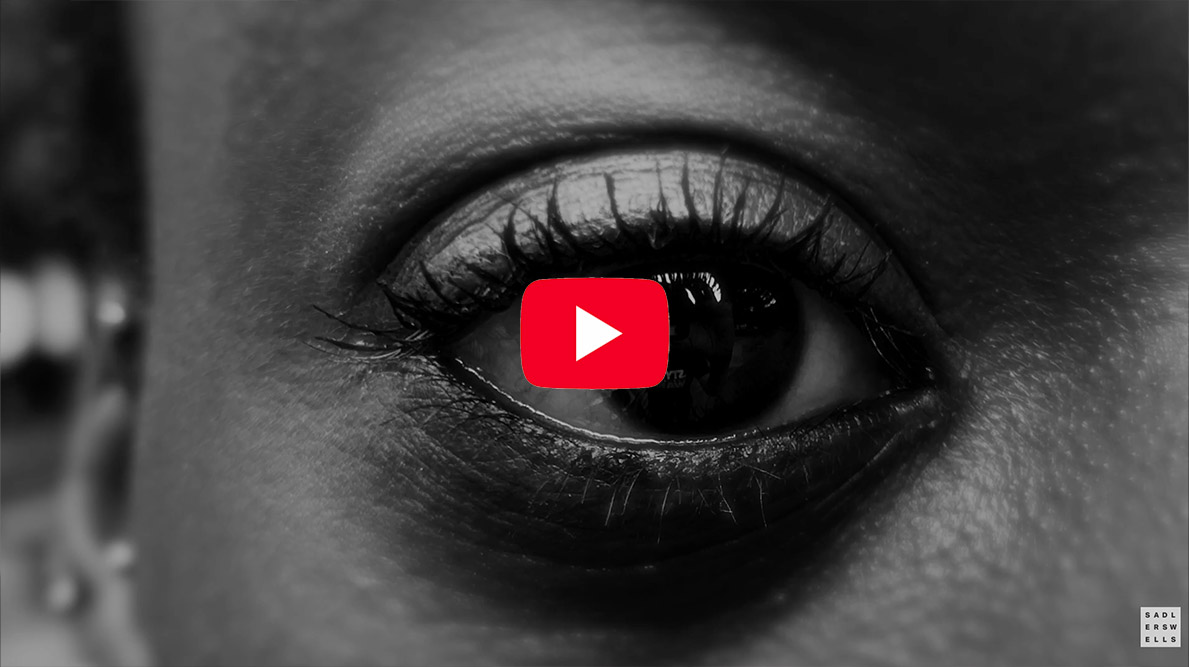
Our Bodies Back stages the work of acclaimed American poet and performance artist Jessica Care Moore in a breath-taking new dance film from Breakin’ Convention Artistic Director and Sadler’s Wells Associate Artist Jonzi D. Created during lockdown, this film is choreographed and performed by Axelle ‘Ebony’ Munezero in Montréal, Canada; Bolegue Manuela (b-girl Manuela) in Hanover, Germany; and Nafisah Baba in London, UK.
Our Bodies Back presents a powerful rendering of Black women’s voices; speaking out against the realities of anti-Black racism, misogyny and sexual violence, while uplifting and honouring in full the Black lives and memories lost, in a stunning ceremony of dance, spoken word and visual art. With soundscape design from Saxophonist and MC Soweto Kinch and poetry by Jessica Care Moore, Our Bodies Back is an empowering ode to Black womanhood, affirming experiences of pain and trauma as well as pride, power and beauty as lived by generations of Black women all over the world.
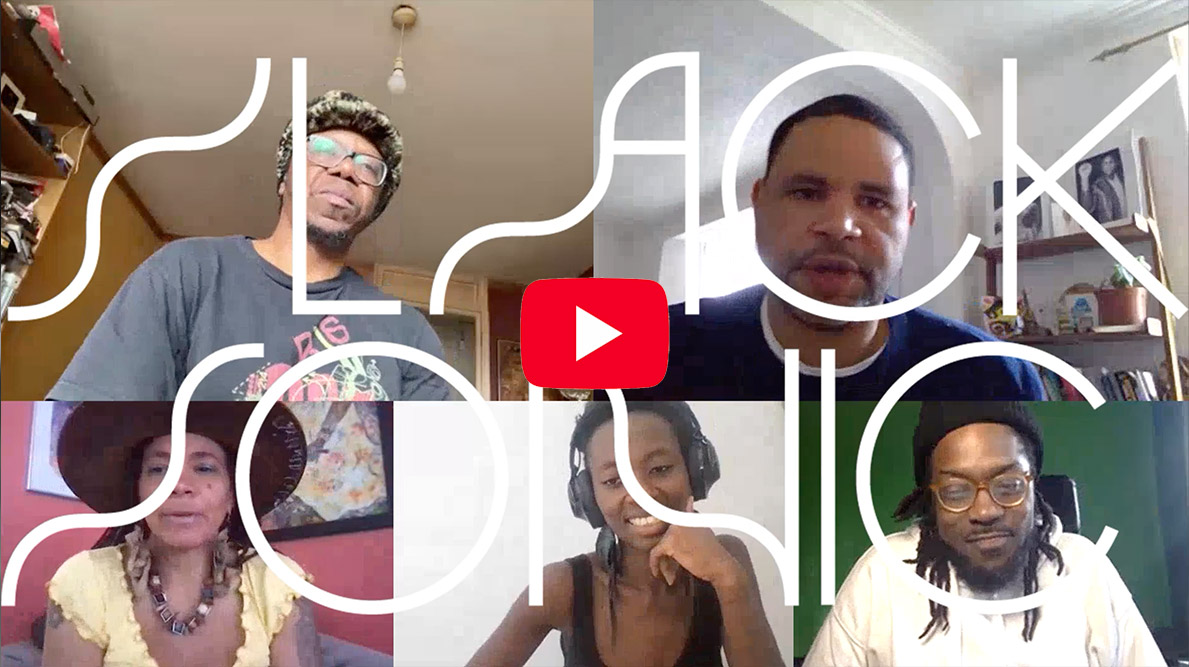
Our bodies back in conversation 1

Our bodies back in conversation 2
Perceptive Knowledges
Responding to calls for heightened attention and attunement to the multiple shapes of Black life, this set explores the politics of seeing and listening in Black culture within the context of quotidian experience. Centrally, the set considers alternatives for characterizing the meaning and shape of Black creation beyond essentially demonstrative performance and grapples with how Black people continue to work, think, play, imagine, and survive amidst the crisis and reality of anti-Black environments.
We gather to interrogate and study ways of “reading” and “perceiving” the Black subject, casting aside the outermost layers of aesthetics to access different optic and sonic registers of engagement; to reveal what Tina Campt refers to as ‘forms of quiet unsayability that exceeds words, sounds, and utterances’1.
Dr. Geri Augusto and Ihab Balla introduce us to the theme, Perceptive Knowledge, with their interrogation of the gaze and consideration of alternative methods of seeing, “reading”, and interpreting Black expressive forms. Dr. Ola Mohammed and Anique Jordan underscore the liberating, eruptive potential and future of Black sound in public space. Michael McMillan and Trevor Mathison explore what it means to work with, remix, and recreate sonic formations.
This set is a careful consideration of Afrodiasporic practices and stories that provide opportunities to interpret rhythms, patterns, and various frequencies differently, as we embrace synesthesia, intuition, contemplation, and improvisation in the stasis of Black life’s everyday orders.
1Campt, T. 2017. Listening to Images. Durham: Duke University Press. 5.
GERI AUGUSTO & IHAB BALLA IN CONVERSATION
Contributors: Geri Augusto and Ihab Balla (featuring Melaine Ferdinand-King)
Geri Augusto is a longtime scholar and former activist at the intersection between the politics of knowledge, knowledge practices, creative expression, and struggles for equality and justice in unequal, highly diverse societies and communities. Her interests include subjugated knowledge, global Black radicalism, colonial sciences, higher education transformation, science and technology policy, and visual arts. Her most recent work spans Brazil, the U.S., and South Africa.
Ihab Balla is an anti-disciplinary artist and educator based in Melbourne, Australia. Across and against disciplines, mediums, and compositions, they are concerned with the atomistic and quotidian practices of Black subjectivities.
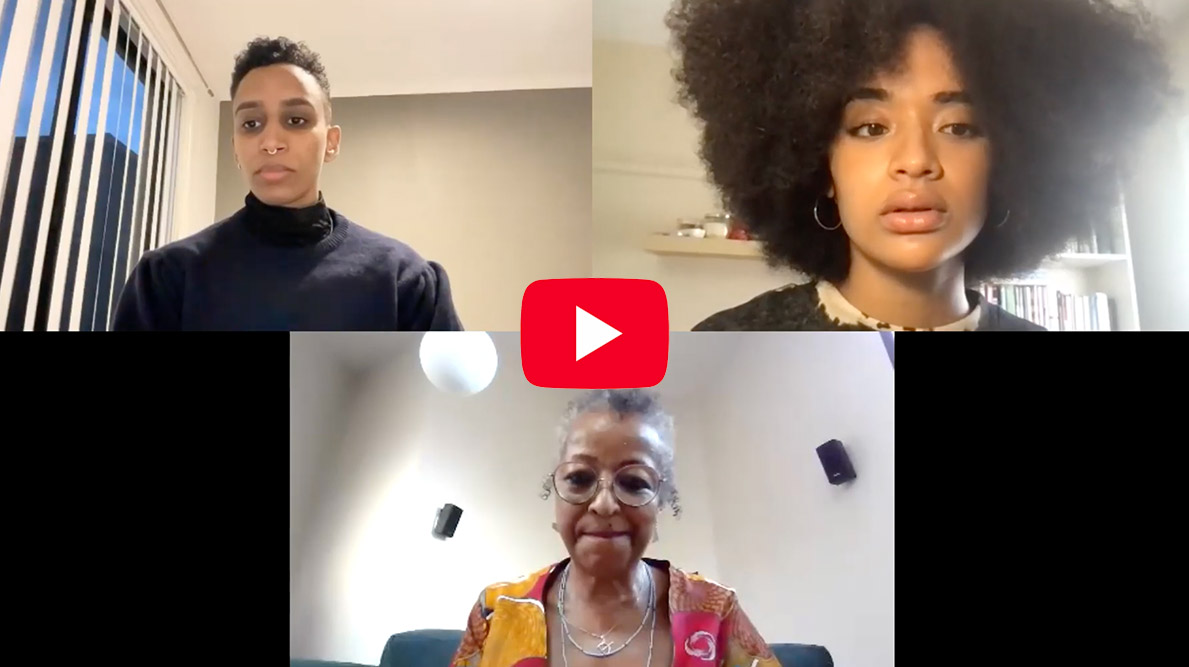
In this hour-long conversation, Geri Augusto and Ihab Balla, present and discuss their current in-progress photographic and cinematic works. Augusto’s photo essay, “Historical Spaces – Hierarchical Gods: Diasporic Worship Series” traces sacral and fugitive practices in Bahia, Brazil, while Balla’s film teaser, Practice, and photo series Topography of Disquiet, explore the challenge of engaging with and witnessing images of Black women and children in Brooklyn, NY. (U.S.) and Melbourne (Australia). This set asks the questions: What does it mean to facilitate one’s own terms of engagement? What are the aesthetic impulses behind entering (or withdrawing) from the terrain of “being seen”? Curator Melaine Ferdinand-King joins them as audience and moderator.
DR. OLA MOHAMMED & ANIQUE JORDAN IN CONVERSATION
Contributors: Ola Mohammed and Anique Jordan
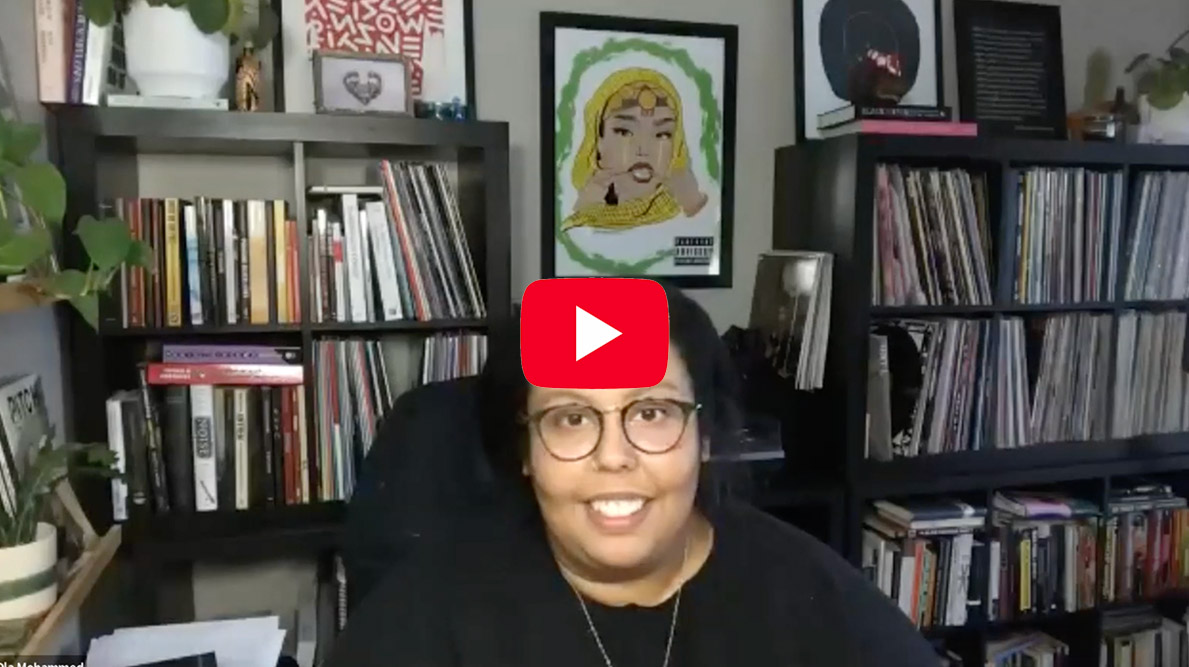
Ola Mohammed is an Assistant Professor of Black Popular Culture in the Humanities Department at York University. Her research is in the areas of Black Studies, Black Popular Music, Sound Studies and Diaspora Studies. She specializes in interdisciplinary research exploring Black cultural production, Black social life and Black being as sites of possibility.
Anique Jordan is a Canadian multi-disciplinary artist, writer, curator and entrepreneur known for her work in photography, sculpture, and performance. Her artwork challenges historical narratives, reinterpreting the past in order to develop a vision of the future.
In this conversation, Dr. Ola Mohammed and Anique Jordan reflect on the role of Afro-Caribbean sound in shaping Black culture in Toronto, Canada as well as its influence on their personal upbringings and original creative, scholarly, and archive-derived works. Throughout their virtual convening, Mohammed and Jordan give consideration to how Black sound functions as a sense-making tool and a distinctly organic articulation of space and community, using Mohammed’s theory of The Black Nowhere and Jordan’s highly acclaimed artistic works as points of departure. Their discussion extends itself as both a listening session of selected songs from the Toronto sound scene as well as a meditation on black noise as informed by their shared knowledge of the city’s rhythms, gestures, and intergenerational histories.