MASIMBA HWATI
Biography
As an interdisciplinary artist working at the intersection of the mediums of sound, performance, and sculpture, Masimba Hwati’s work surveys postcolonial themes through sculptural assemblages of found objects and sonic performances.[1] He explores these ‘hangover cultures’ through experimenting with perceptions and symbolism attached to the cultural objects he works with, most of which are historically and culturally imbued.[2] . His research explores African sonic epistemologies, postcolonial urban improvisations, and the ancestral dimensions of vibration and listening. Hwati’s theoretical framework, Chidzimbahwe Sonic Philosophies, unfolds sound as a site of survival, resistance, and cosmological memory. He has exhibited and performed internationally, with work held in major public and private collections.
Born and raised in 1982 in one of Harare’s oldest suburbs, Highfields, Hwati completed his schooling between Mhondoro and Highfields, in Zimbabwe.[3] His first experiences with assemblage began when he was a child, growing up along a river where a toy factory dumped its rejected toys. He would combine the different toy-parts, making hybrid forms of superheroes and other toys.[4] During his childhood, he watched BBC documentaries through which he became more aware of the British colonial gaze and this sparked his imagination to think of the world between what he was seeing in these documentaries and reality people experience.[5]
Hwati went on to pursue tertiary education at Harare Polytechnic from 2001 to 2003 where he majored in Ceramics and Painting, graduating with a first class diploma in Fine Art in 2003.[6] While Harare Polytechnic followed a more Bauhaus approach, he was not discouraged from being more experimental with his materials, which encouraged him to learn to improvise with the materials available to him.[7] After graduating, his work was included in the Harare Biennale at the National Gallery of Zimbabwe in 2005 and in 2007 his work was included in the exhibition ‘Vibes, Pledges and Oracles’, also at the National Gallery of Zimbabwe.[8] In 2011 he opened his first solo exhibition, ‘Facsimiles of Energy’ at Delta Gallery in Harare. At this time, he also lectured at Harare Polytechnic, teaching three-dimensional art.[9]
Hwati participated as one of three artists for the Zimbabwean Pavilion at the 2015 Venice Biennale in the exhibition ‘Pixels of Ubuntu/Unhu’. His work was shown alongside Chikonzero Chazunguza and Gareth Nyandoro.[10] Together, their exhibition interrogated consumer culture and cultural identity as it pertains to the philosophies of Ubuntu and Unhu, which emphasizes interrelational being and connection, locally, regionally, and globally.[11] In 2016, he won the Cape Town Art Fair Special Projects prize for his solo ‘Don’t Worry Be Happy’, which he remarked was “a great introductory token into the growing Southern African art scene”, as it was his first solo show in the region.[12]
In 2017 Hwati completed a Certificate in Building Indigenous Knowledge Systems for Development at Coady International Institute within St Francis Xavier University in Canada.[13] For a long time, Hwati has been interested in the history of different cultures, pre- and post-colonialism and this interest has been translated through his works.[14] Hwati continued his studies, graduating in 2019 from the Stamps School of Art & Design at University of Michigan, Ann Arbor with a Master of Fine Arts.[15] He is also an alumni of the Skowhegan School of Painting and Sculpture.[16]
While in Michigan, Hwati worked closely with the Zimbabwean Cultural Centre of Detroit, where he became a board member and facilitated a number of artist exchanges between Harare and Detroit.[17] Drawn to the similarities he found between Detroit and Harare, Masima Hwati found the character and identity produced by the two cities to be inspirational and unique. He admires the resilience of the people who both saw their cities undergo economic demise. Moreover, simultaneously, an artform called ‘Jit’ developed in both – in Detroit it is a dance form and in Harare it is a music genre with elements of dance – and this coincidence, or mystery as Hwati describes it, inspired his creative practice to further explore music, ritual, and cultural identity between the two cities. His work between Detroit and Harare inspired his work Futumuka Fulangenge (2019), a video performance which explored the sounds, feelings, and images Hwati identified as resonances between the two cities.[18] Masimba Hwati is furthering his postgraduate education and is completing a PhD in Art Practice at the Akademie der Bildenden Künste Wien, where he is exploring the intersections of sound, sculpture, and performance through sonic territorial marking, specifically the onomatopoeic and phonetic registers within the Shona language and culture.[19]
Masimba Hwati has participated in a number of artistic residencies including during the height of the COVID-19 pandemic, where he had spent time in lockdown in South Carolina. During this time, sound played an important role in punctuating his day, from the sounds of the train whistling, to the police and fire-service’s sirens and lights filling his space with blue or red. This experience further contributed to his awareness of listening practices and sonic politics.[20] In 2021 at El Espacio in Miami where his work centered around sonic cultural resistances, and the beautiful and depleting experiences of organizing struggle. Here he producd the sculptural installation Deep struggle that is part of a series of sculptures and performances that Hwati has been working on since 2018. These works are centered around the idea of cultural resistance. The piece produced at El Espacio in particular, is a nod to the history of ‘Deep City Records’ the first black owned record label in Miami. The label was born in the mid 60’s, at the height of the Civil Rights Movement and at a time that shaped black politics and culture in the United States. Together with other movements like Motown in Detroit, spaces such as this were created and sustained by a deep struggle to negotiate black socio-political space through fostering a culture of sound. At about the same time, Sub Saharan Africa was experiencing a political and cultural chapter known as the “ winds of change,” a period when most of its nations gained freedom via liberation struggle. The artist is fascinated by the idea of how struggle can be both a depleting and beautiful process at the same time. The previous work in this series is called Ngoromera a Shona word that means ‘to fight ‘or ‘struggle’, is part of the UMMA (University of Michigan Museum of Art) collection and explores an attenuated militant aesthetic using objects such as spears trumpets and bugles altering and modifying them to produce new sounds. Interested in the beautifully awkward and uncanny results that can come out of a struggle, the artist intentionally makes the instruments harder to play.
In 2022 Hwati produced an seminal “Bread scores”. Bread Scores emerges from the ingenious and defiant practice of smuggling hidden messages to political prisoners in Zimbabwe—notes and radio fragments once tucked inside loaves of bread as acts of quiet rebellion. Reviving this history of covert communication, Masimba Hwati transforms bread into both medium and message. During the performance, he carefully conceals graphic musical scores or written messages within dinner rolls, transforming each loaf into a vessel of encrypted sound. Musicians are then invited to break the bread, uncover the secret within, and interpret it through their voices or instruments. In this act of revelation, the mundane ritual of eating becomes a moment of sonic communion—a “sonic ritual” that channels the memory of Chimurenga, Zimbabwe’s revolutionary struggle, while celebrating enduring resistance and resilience. Hwati first developed Bread Scores in 2021 during his Radio Art Residency in Weimar. The work has since resonated across borders, notably finding new expression at the Haus der Kulturen der Welt (HKW) in Berlin in June 2023. The third iteration of Bread scores took place in October 2025 at The Royal Ontario Museum in Toronto. The 4th Iteration will take place in San Jose Costa Rica in March 2026 and the 5th in Nicosia Cyprus in October 2026.
His works show an attunement to militarized aesthetics while also offering a nod towards the struggle for Black socio-political space and how politics and culture engage sound and sonic politics.[21] This work was activated as part of the 2021 Art Basel in Miami with guest performers from Florida International University School of Music.
In 2025, Masimba Hwati and Michael Gould’s collective Zebra Collective, were artists-in-residence at the Visual Identities in Art and Design Research Centre at the University of Johannesburg. Their work, an immersive mutli-media installation, brings together both of their sonic practices, alongside Hwati’s assemblage sculptures to summon the spirit of Nyami-Nyami as a symbol of resistance and ecological memory.
Masimba Hwati’s practice brings together sonic and video performance, and sculptural assemblage to explore post-colonial themes of identity and cultural politics to illuminate how these reverberations of the past and the present can be melded together in politically and historically charged works.

ARTISTS STATEMENT
We are The Zebra Collective, co-founded in Berlin in 2022 by Dr. Michael Gould and Dr. Masimba Hwati. Together, we explore the intersections of sound, performance, and sculpture through a shared commitment to experimental collaboration. Michael Gould, Professor of Music at the University of Michigan, specializes in percussion within both the School of Music, Theatre & Dance and the Residential College. Masimba Hwati is an interdisciplinary artist and researcher whose practice traverses sculpture, sound, and performance.
Our partnership began with the project *Nyami Nyami*, created alongside TanzTangente Dance Company in Berlin. This project became the springboard for our ongoing exploration of how climate change and human intervention have shaped the lives of the Tonga people along the Zambezi River. We frame this narrative within the broader context of the Anthropocene, delving into the intersection of ecology, myth, and displacement.
As The Zebra Collective, we fuse sculpture, sound, and technology to interrogate the ecological and cultural impacts of the Kariba Dam on the Zambezi. At the heart of our work is Nyami Nyami, the river deity of the Tonga—an enduring symbol of nature’s resistance and resilience. Through this myth, we investigate cycles of rupture and renewal, linking ancestral cosmologies to contemporary infrastructures and their effects on the environment.
Since our inception, we have developed several versions of the Nyami Nyami project, each reimagining the mythology through new media and performance. Our first iteration, *Nyami Nyami – Water Does Not Lie*, premiered at the TanzTangente Gallery in Berlin in 2022. This installation and performance meditated on water’s memory and truth—its power to reveal, cleanse, and defy human control.
Later in 2022, we created *Nyami Nyami und der Schlangenkönig der Lausitz*, performed on a farm in Ogrosen, Lausitz, for the Global Water Dances Festival. This version drew connections between the serpent guardians of the Zambezi in northern Zimbabwe and the Schlangenkönig (Snake King) from the Lausitz region of northeastern Germany. By bringing these myths into conversation, we explored how different cultures invoke serpent cosmologies to express awe for nature’s power and mystery.
The third iteration, *Nyami Nyami in Deep Time*, was realized at the University of Michigan in collaboration with the Department of Civil and Environmental Engineering. Here, we reimagined the Nyami Nyami myth as a portal to understanding time on a geological scale, inviting reflection on ancient worlds, deep rhythms, and futures beyond the human perspective. In this work, we incorporated models of ancient Shona stargazing pools and augmented guitars that were activated with clock spring machanisms. These hybrid instruments allowed us to experiment with sound as a medium of transformation, bridging ancestral histories with speculative futures—sound as an echo that connects deep time to the present.
Through The Zebra Collective, we continue to pursue the intersection of myth, ecology, and technology, questioning how sound and sculpture can hold environmental memory and spiritual continuity. Our aim is to provoke new ways of listening—not only with the ears, but with the entire body—to the resonances of rivers, stones, and ancestral currents that shape our shared existence. Through our practice, we reflect on the entanglement of myth and matter, and on the enduring power of art to reimagine relationships between humanity, nature, and time.
The Johannesburg performance pushed our exploration of digital technologies and indigenous immaterialities into new territory. Sound and materiality met in a vivid, shape-shifting field: the guitar’s low drone, the e-bow’s magnetic pull, pedal-driven algorithms, ritual water-song, and drums tuned to echo sky and star. None of these elements stood alone—they collided, intertwined, and braided themselves into a single living texture.
Together we moved through simultaneous multi-meter and polyrhythmic passages, layering constantly shifting timbres that touched global styles before dissolving into something unbound, something otherworldly. The performance opened with a focused drone, the e-bow held over the guitar’s bass pickup and smeared into warmth. For a brief moment, the ensemble synchronized, breathed together, and then released—ricocheting back into a charged, intentional chaos.
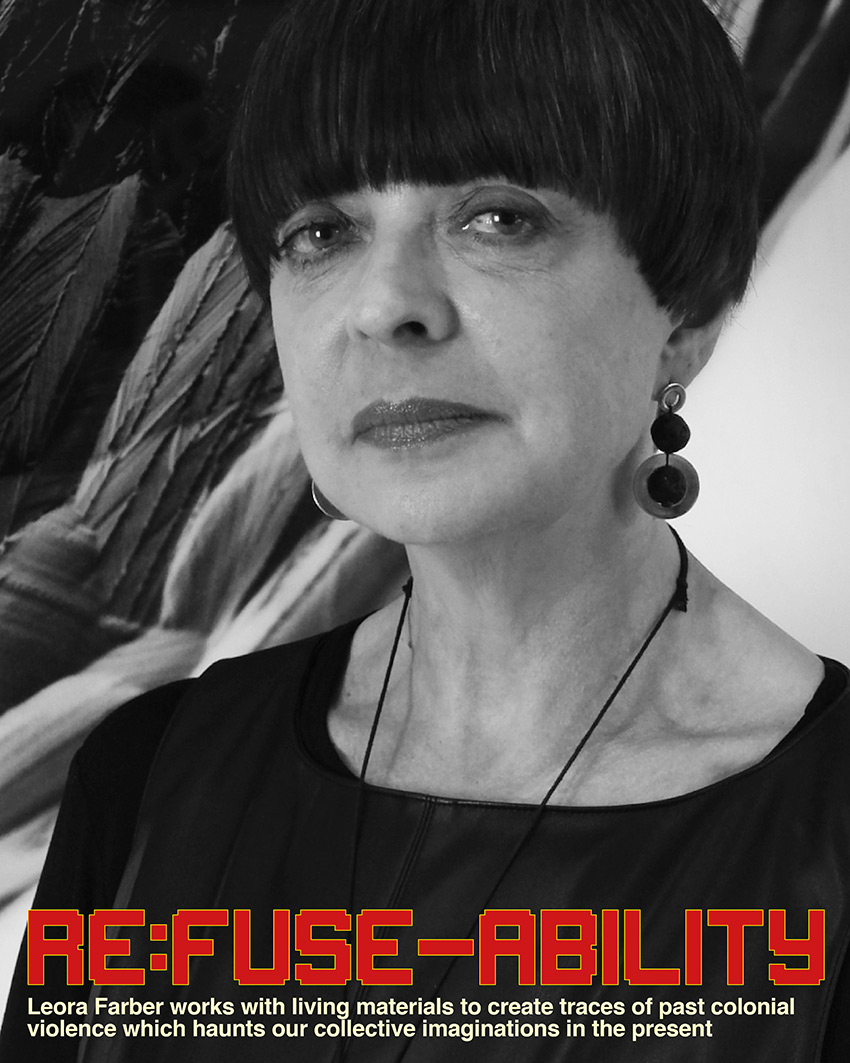
The audio piece woven into the performance also formed part of Re-fuse-Ability, FADA Gallery, 2025.


Sources
[1] Masimba Hwati. [no date]. Available at: https://www.secondactgallery.co.uk/masimba-hwati [Accessed: 15 July 2025].
[2] Masimba Hwati, Zimbabwe. 2016. Available at: https://africanah.org/masimba-hwati-zimbabwe/ [Accessed: 15 July 2025].
[3] Chikukwa, R. 2015. Masimba Hwati – curator’s blackbox. Available at: https://curatorsblackbox.wordpress.com/tag/masimba-hwati/ [Accessed: 15 July 2025].
[4] Preece, R. 2022. Fragile and Beautiful Complexity: A Conversation with Masimba Hwati. Sculpture. Available at: https://sculpturemagazine.art/fragile-and-beautiful-complexity-a-conversation-with-masimba-hwati/ [Accessed: 15 July 2025].
[5] Preece, R. 2022. Fragile and Beautiful Complexity: A Conversation with Masimba Hwati. Sculpture. Available at: https://sculpturemagazine.art/fragile-and-beautiful-complexity-a-conversation-with-masimba-hwati/ [Accessed: 15 July 2025].
[6] Masimba Hwati, Zimbabwe. 2016. Available at: https://africanah.org/masimba-hwati-zimbabwe/ [Accessed: 15 July 2025].
[7] Preece, R. 2022. Fragile and Beautiful Complexity: A Conversation with Masimba Hwati. Sculpture. Available at: https://sculpturemagazine.art/fragile-and-beautiful-complexity-a-conversation-with-masimba-hwati/ [Accessed: 15 July 2025].
[8] Masimba Hwati, Zimbabwe. 2016. Available at: https://africanah.org/masimba-hwati-zimbabwe/ [Accessed: 15 July 2025].
[9] Chikukwa, R. 2015. Masimba Hwati – curator’s blackbox. Available at: https://curatorsblackbox.wordpress.com/tag/masimba-hwati/ [Accessed: 15 July 2025].
[10] Gwetai, T. 2015. Pixels of Ubuntu/ Unhu. Available at: https://artsandculture.google.com/story/pixels-of-ubuntu-unhu-la-biennale-di-venezia-zimbabwe-pavilion/fgUxSE1-vgEdIw?hl=en [Accessed: 16 July 2025].
[11] Gwetai, T. 2015. Pixels of Ubuntu/ Unhu. Available at: https://artsandculture.google.com/story/pixels-of-ubuntu-unhu-la-biennale-di-venezia-zimbabwe-pavilion/fgUxSE1-vgEdIw?hl=en [Accessed: 16 July 2025].
[12] ART AFRICA. 2016. FNB JoburgArtFair: Masimba Hwati and Gareth Nyandoro. Available at: https://artafricamagazine.org/masimba-hwati-gareth-nyandoro-smac-gallery/ [Accessed: 16 July 2025].
[13] El Espacio 23. [no date]. Masimba Hwati. Available at: https://elespacio23.org/2020/12/19/masimba-hwati/ [Accessed: 15 July 2025].
[14] Chikukwa, R. 2015. Masimba Hwati – curator’s blackbox. Available at: https://curatorsblackbox.wordpress.com/tag/masimba-hwati/ [Accessed: 15 July 2025].
[15] El Espacio 23. [no date]. Masimba Hwati. Available at: https://elespacio23.org/2020/12/19/masimba-hwati/ [Accessed: 15 July 2025].
[16] Masimba Hwati, 4/8/2022. 2022. Available at: https://stamps.umich.edu/events/masimba-hwati-2 [Accessed: 16 July 2025].
[17] Stamps School of Art and Design. 2019. Alumni Spotlight: Masimba Hwati (MFA ‘19). Available at: https://stamps.umich.edu/news/alumni-spotlight-masimba-hwati-mfa-19 [Accessed: 16 July 2025].
[18] Stamps School of Art and Design. 2019. Alumni Spotlight: Masimba Hwati (MFA ‘19). Available at: https://stamps.umich.edu/news/alumni-spotlight-masimba-hwati-mfa-19 [Accessed: 16 July 2025].
[19] Masimba Hwati. [no date]. Available at: https://www.secondactgallery.co.uk/masimba-hwati [Accessed: 15 July 2025].
[20] Hub City Writers Project. 2020. Interview with HUB-BUB Artist-in-Residence Masimba Hwati. Available at: https://www.hubcity.org/blog/interview-with-hubub-artistinresidence-masimba-hwati [Accessed: 16 July 2025].
[21] El Espacio 23. [no date]. Masimba Hwati. Available at: https://elespacio23.org/2020/12/19/masimba-hwati/ [Accessed: 15 July 2025].
MEET THE ARTISTS