

The Imagined New Volume III
Confronting Violence and Catastrophe:
Power, Grief and Hope
Hosted by VIAD and the Africa Institute, Global Studies University in partnership with the Ruth J. Simmons Centre for the Study of Slavery and Justice
VARIOUS LOCATIONS
2025-2027
Volume III extended the initial aims of the Imagined New to a framing under the thematic of ‘Confronting Violence and Catastrophe: Power, Grief and Hope’. The theme followed the unspeakable violences unfolding across the globe, from 2024 and ongoing. For Volume III, the partnership between the Visual Identities in Art and Design Research Centre (VIAD), University of Johannesburg (UJ) and the Ruth Simmons Centre for the Study of Slavery and Justice (CSSJ), Brown University (BU), extended its network of global partners. Volume III includes collaboration with The Africa Institute (AI), Global Studies University (GSU).
As an ongoing iteration of the project, Volume III highlights current ways in which contemporary settler colonialism and manifestations of authoritarianisms – as forms of rule – create death worlds. This contemporary moment in the histories of violence is one where human life can only be told through ‘tales of death’. In Palestine, Sudan, Haiti, the Democratic Republic of Congo and Ethiopia, violence, sometimes framed by war, has become an everyday occurrence, such that human life often becomes superfluous. How do humans live in such contexts? Indeed, the Imagined New Volume III asks what does it mean to be human in contexts where war and violence are not instruments of power but in their practices become power themselves?
Volume III takes places in four phases:
Part 1 – a convening of scholars and artists at the Africa Institute, Global Studies University
Part 2 – thought dialogues with artists, academics and activists at VIAD Research Centre, University of Johannesburg
Part 3 – an exhibition curated by Professor Anthony Bogues at the Africa Institute, Global Studies University
Part 4 – publication of the book the Imagined New Volume III | Confronting Violence and Catastrophe: Power, Grief and Hope


Part 1
The Africa Institute, Global Studies University
07-09 April 2025
The Imagined New (or, what happens when History is a Catastrophe?): Volume III part 1 brought together a community of scholars and artists to critically examine the entanglements of questions of war, catastrophe, and the human condition. The convening foregrounded co-learning and exploratory provocations on how historical and contemporary forms of violence shape realities and possibilities for the future. The internal workshop took place from April 7-9, 2025, at The Africa Institute (AI), Global Studies University (GSU) marked the beginning of a four-part, 18-month initiative and will culminate in a new publication.
It connects African and African Diasporic critical thought and practice around issues of contemporary violence and catastrophe in historical and creative formations. In the workshop, part one of Volume III, the following question was posed: What does it mean to be human in contexts where war and violence are not instruments of power but become power themselves?
Framed by Professor Anthony Bogues, who also presented a rousing lecture, Volume III began with acknowledging the possibility of war and violence as catastrophes in the twenty-first century which do not constitute the political in the Black Radical Thought articulations of the human condition. Critical theory, Bogues reminded the gathering, shows that amazement alone is not the foundation of knowledge—rather, it is the product of flawed historical perspectives that must be deconstructed.

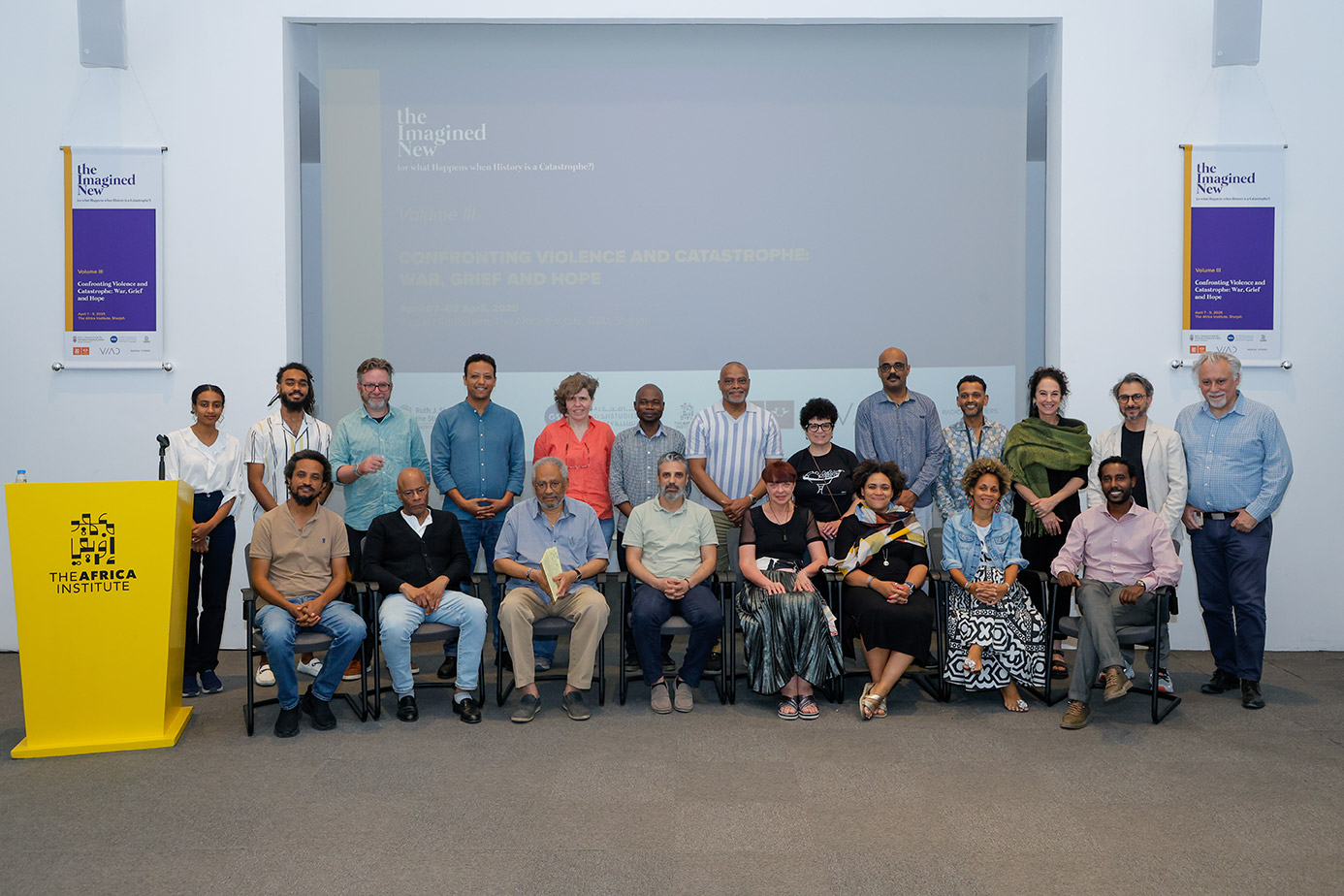
Drawing from Black Radical Thought and intersectional feminism, participants engaged in “world scale” analysis emphasizing the interconnectedness of located histories of suffering, survival and resistance. An important consideration of what it means to imagine humanity through intertwined, intersectional, and compounded calamities. The assembly of invited scholars and artists was largely drawn from the Global South and considered how the catastrophes discussed have long histories, with 1492 marking a pivotal reference point that introduced enduring structures of occupation, dispossession, terror, and hierarchical systems of racial, economic, and gender-based classification imposed on so-called “non-Europeans.”
The legacies entangled with the past participants argued continue to shape the contemporary world by three dominant forces:
- A peculiar kind of power which seeks to crush the radical human imagination, and
- Forms of violence which make human life superfluous
- The emergence of forms of authoritarianism
Artists participating in the workshop shared their creative confrontations with violence, observing the demand for alternative ways of thinking and worldbuilding. The engagements prompted critical dialogue, by all involved, on reimagining the human in the face of violence and catastrophe. Distinguished Visiting Professor in VIAD Professor Anthony Bogues presented a lecture, titled The Present Conjuncture: Illiberalism, War and Violence – A Perspective drawn from African and African Diaspora critical traditions. Bogues examined the current political and social landscape as a “new conjuncture” shaped by the transformation of violence into power through what he termed “death-worlds.” Bogues’ lecture posed pressing questions on what it means to be human today and how alternative forms of life might be imagined.
The convening engaged artists, scholars, and students in immersive provocations, conversations, lectures, and performances. Master of Arts students in Global African Studies at The Africa Institute actively participated in discussions and engaged with Professor Bogues and Professor Leora Farber, Director of the Visual Identities in Art and Design Research Centre (VIAD), and other visiting African and African Diaspora artists and scholars who were part of the workshop. These interactions underscored the convening’s co-learning objective toward enhancing high-quality education and promoting scholarship as a lifelong learning opportunity. The fruitful collaboration between AI, GSU and VIAD with the Simmons Centre (CSSJ) critically engaged the task of reducing inequalities amongst countries in the world which differentially encounter war and violence. By confronting the uneven, global experiences of war and violence, the workshop emphasized the need to protect and build cultural and educational institutions promoting peace, justice and gender equity. The collaboration of the three partner-institutions reaffirmed the need for mutual collaboration in the international pursuit of free and sustainable futures.
The final evening of the gathering, held on April 9 at The Africa Hall, featured a conversation with members of the orchestra and a stirring performance by the AlMultaqa Afro-Arab Harmonic Orchestra. The performance explored the intersection of heritage and contemporary expression, using music as a space for convergence. It highlighted how music can engage deeply with themes of violence, grief, and hope, providing an emotional and intellectual reflection on these critical issues.
“The Imagined New – Volume III wrapped an unforgettable 3-day workshop—a space of radical generosity and critical imagination. Artists, scholars, and thinkers came together to hold intense, moving conversations around war, grief, and hope—thinking through their deep historical entanglements without losing sight of specific, lived experiences from across the globe. We pushed beyond the boundaries of panels and lectures into truly dialogic thinking. We were also moved by the stirring performance of the AlMultaqa Harmonic Orchestra, who brought music into the conversation—not as a prop, but as part of the deep inquiry into violence and the politics of hope. This is only the beginning. Volume III will culminate in a new publication—an offering to ongoing struggles for justice, memory, and radical futures.”
Professor Surafel Wondimu Abebe at The Africa Institute reflected on the experience of Part One
Part Two
VIAD Research Centre, University of Johannesburg
02 – 04 September 2025
As Part Two of the multi-modal Volume III project, VIAD Research Centre hosted thought dialogues, in Johannesburg, with a group of invited artists, activists and academics.
The programme included events which were open to the public; as part of the core group’s collaborative thinking process and engagement with themes of domination, war, ecocide and epistemicide. The focus for this core group was on deepening interdisciplinary conversation between African and Afrodiasporic people who are pursuing alternative languages of resistance in a time when discourses of liberation are captured by illiberal democracies. The theme of Confronting Violence & Catastrophe: Power, Grief and Hope challenged the core group to imagine visions of hope amidst planetary turmoil. By inviting key thinkers and makers from Africa and the African diaspora, to engage with creative practices of resistance and questions of power, the Imagined New Volume III continued to provide space for rich dialogue and debate by fostering vital knowledge-making as required by the conflicts in Palestine, Sudan, the Democratic Republic of Congo and Haiti.
Where Sylvia Wynter discusses notions of an interminable catastrophe that marks human history since colonisation, it has also become apparent that the work of liberation does not begin nor end with the inauguration of democratic statehood, but that vigilance is required in keeping oppression at bay. What this important gathering of a core group of makers and thinkers was tasked with, was to reflect on violence ways across the planet, to look at creative practices by people working towards freedom. the Imagined New Volume III, Part 2 then, was a call to respond to the question: How might we draw connections between legacies of colonization, racial slavery, apartheid and its afterlives to expose, the long durée of History as Catastrophe, whilst remembering the nodes of cultural insurgency that sustain radical imagination?


During the Johannesburg gathering of the Imagined New Volume III, Part 2, storytelling surfaced as a general condition of worldbuilding, beyond medium or method even message, and certainly beyond its narrow artistic or literary place.
Works by Anthony Bogues, Sammy Baloji, Jumana Manna, Heidi Grünebaum, Noor Abed and Albert Khoza brought the thinkability of genocide into dialogue with histories of slavery, colonisation of different kinds, apartheid, grief and power as well as radical hope. By investing in telling stories from perspectives from the so-called “below” Bogues’s and Yannick Etoundi’s Unfinished Conversations (2024) soared across borders to document stories by maroons in the Caribbean, activists in South Africa, congregants in Ghana and descendants of not only the enslaved but also descendants of enslavers in Senegal. Stories that demanded to be told in a new way. Baloji’s The Tree of Authenticity (2025) played with telling the tale of the long durée of European ecocide in the Democratic Republic of Congo (DRC) while archiving the labour of Congolese people in securing empires of environmental dissonance. Working with expansive drone images and giant shots of trees towering above the human-inhabited forests, Baloji’s cross-sections of landscapes are spliced by quiet colonial ruins that echo an abandonment of the DRC, left to act as a shell company for the long reach of European power. In Manna’s Foragers (2022), the green foliage of Palestine is seen from the perspective of a leaning forager, moving between the greenery as well as lenses analogous to the confessional medium-close-up and frustratingly disruptive views of the landscape’s policing by Israeli forces. Foragers presents a soft-toned familial image of people and animals walking, swimming, eating, sleeping and refusing to adhere to criminal laws against the livelihood of people in Palestine. Noting a concern that chronicling genocide should not make an exceptional case of the geopolitical region, the content and procedures of the films was discussed alongside their experimental practices to earmark shared creative strategies of living otherwise.
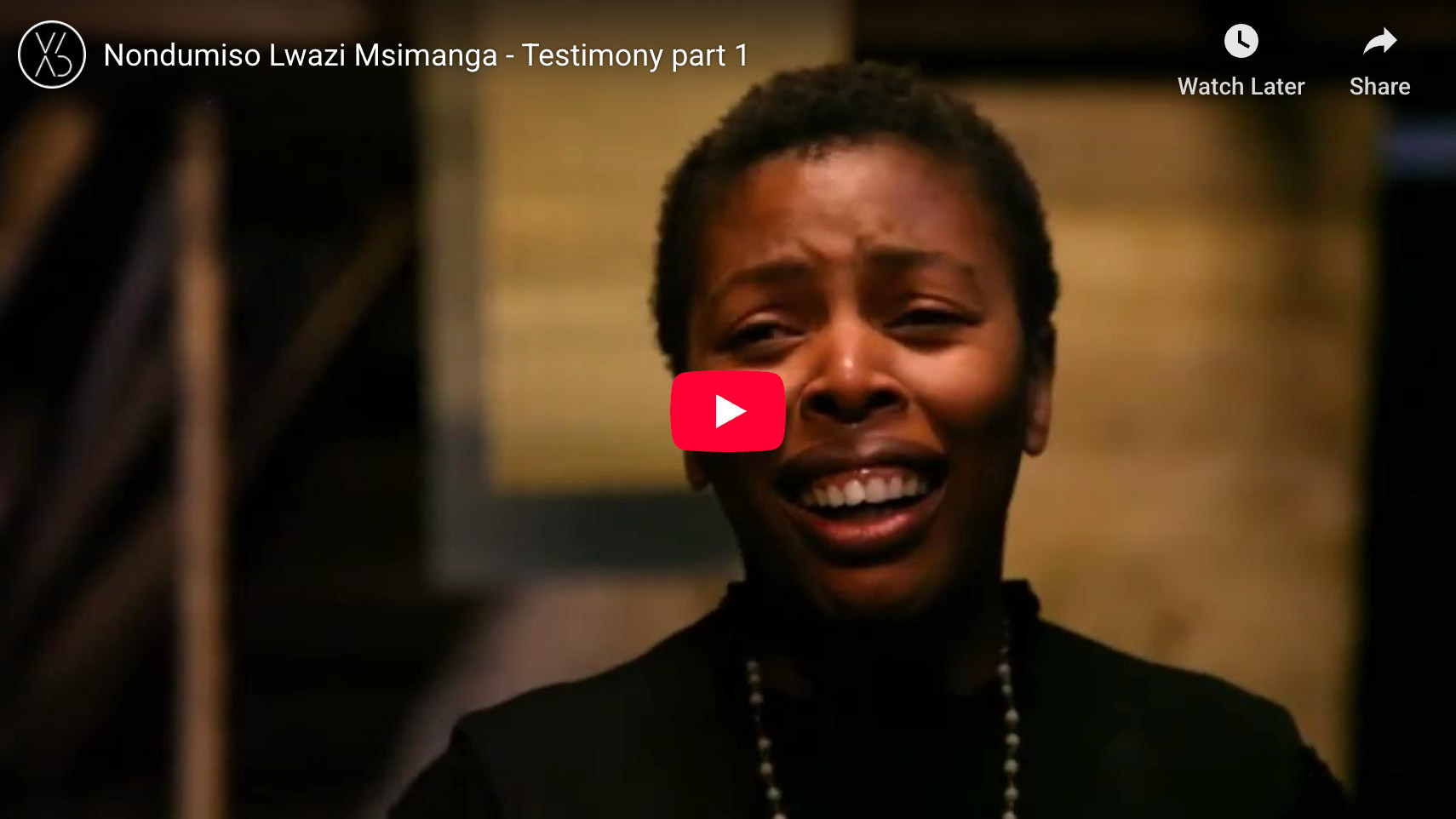
Nondumiso Lwazi Msimanga, 2019. Testimony. Film. 4 mins.
Courtesy of the artist.

Sammy Baloji. 2025. The Tree of Authenticity. Film. 81 mins.
Courtesy of TwentyNine Studio.

Jumana Manna, 2022. Foragers. Film. 64 mins.
Courtesy of the artist.
Having to face the acceptance of genocide as status quo in the present moment, the group shared in viewing Grünebaum and Mark Kaplan’s The Village Under the Forest (2013). Here, the idea of telling from below and thinking about the reasons for current popular support of a genocidal destruction of Palestinian lives, among others, was contentious. Grünebaum’s reflection on South African Jewish cultures and indoctrination of Jewish Israelis amongst the poetic reflection of Palestinian resistance to ecocide- as part of the project of genocide- raised the spectre of whiteness, its complexity and its circular histories of persecution.
The screenings and performance served as a reminder that Sylvia Wynter discusses notions of catastrophe as a marker of human history since modern colonisation and that it has been apparent to Radical Black intellectual traditions, for quite some time, that the work of liberation does not begin nor end with the inauguration of democratic statehood, but that vigilance is required in keeping oppression at bay.

Heidi Grünebaum and Mark Kaplan, 2013. Documentary. 55mins.
Courtesy of the artist.
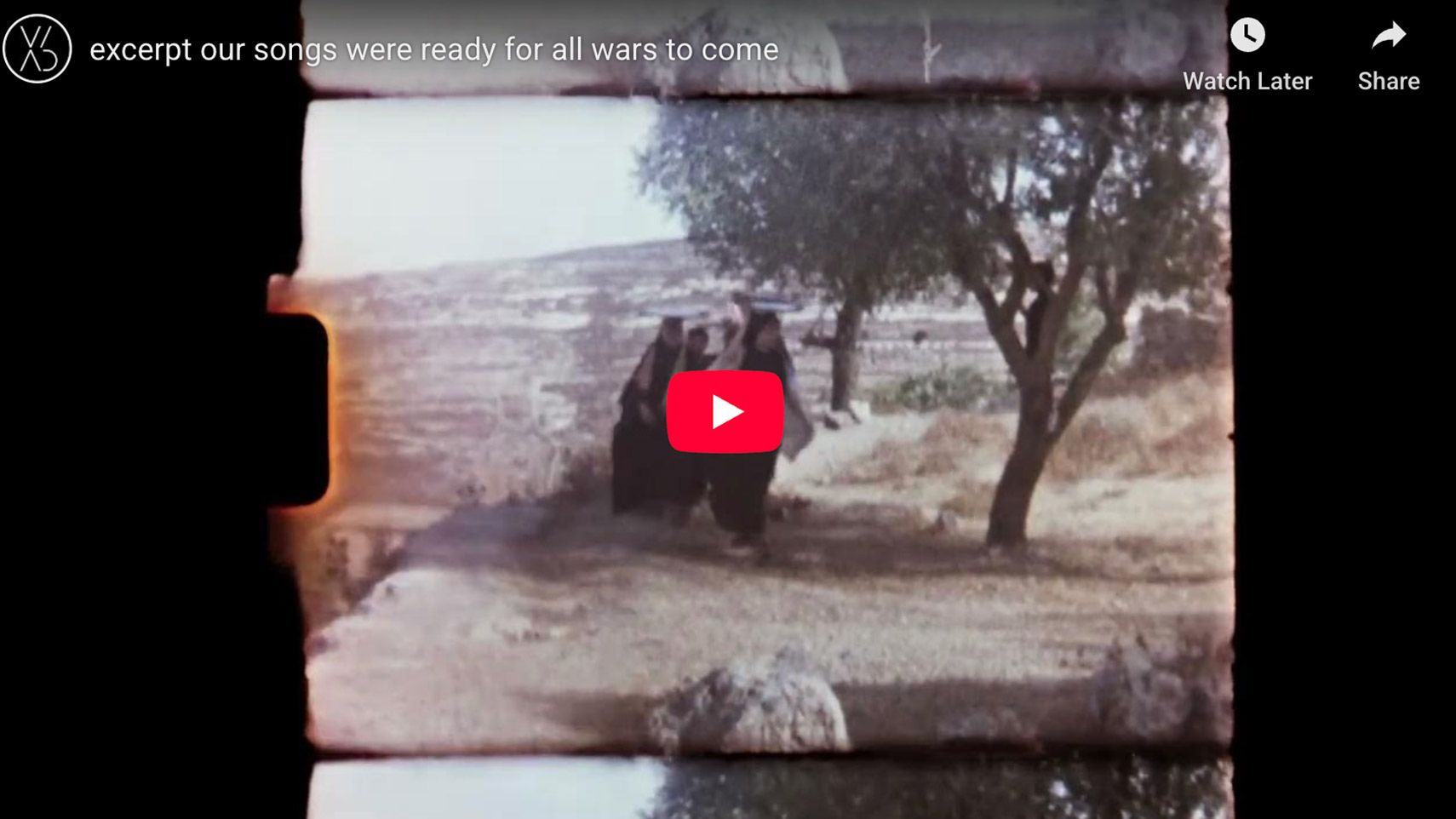
Noor Abed, 2021. Super 8mm. Film. 20 mins.
Courtesy of the artist.

Anthony Bogues and Roxanne Harris, 2025. Uncorking the Bitter Truth: Slavery’s Legacy in Cape Wine. Documentary. 60 mins.
Courtesy of the artist in partnership with iRox Content Studio.
The Imagined New Volume III’s Johannesburg encounter, was a call to respond to the question: How might we draw connections between legacies of colonisation, racial slavery, apartheid and their afterlives to expose, the long durée of History as Catastrophe, whilst remembering and experimenting with the nodes of cultural insurgency that sustain radical imagination?
Discussion of the question was also necessarily underscored by the inquiry of “How may we still hope?